How We Drove 300+ Leads Across 3 SaaS Tools (Without Wasting Ad Spend)
Over the last few months at StageTwo, We’ve been running paid campaigns across three very different products.
- One for people starting a business who don’t have a website
- One for finance teams using tools like Tally, SAP etc.
- And one for companies that care deeply about customer experience
All three fall under SaaS, but that’s about where the similarity ends.
What actually mattered was how each of these products sold.
Koadz.ai — Solving a Clear, Immediate Problem
Koadz is for people who are just getting started and don’t have a website yet.
That’s a very straightforward problem. You don’t need to educate too much. People already know they need something — they just need a way to get it done quickly and affordably.
So here, paid ads could do a lot of the heavy lifting.
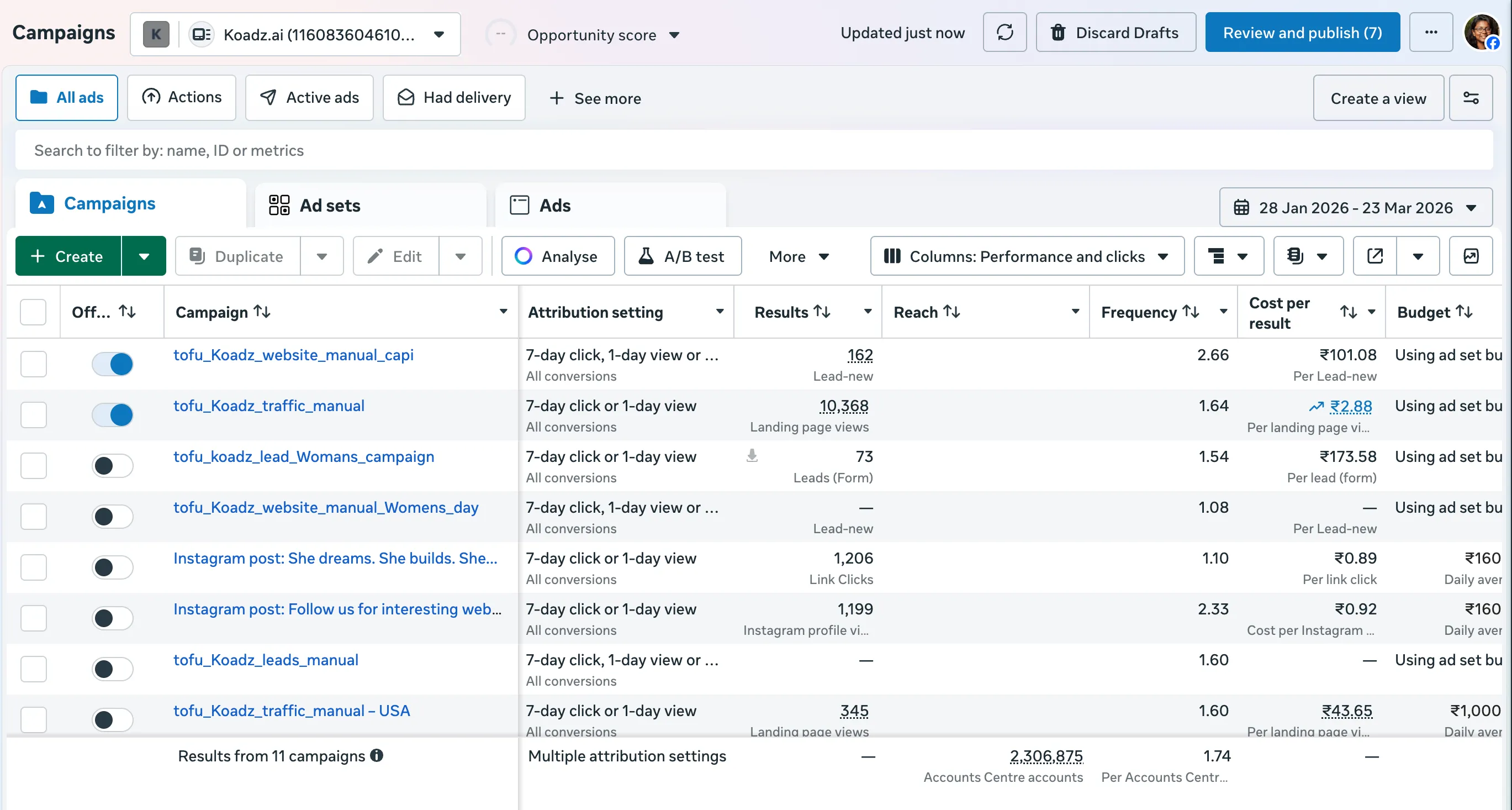
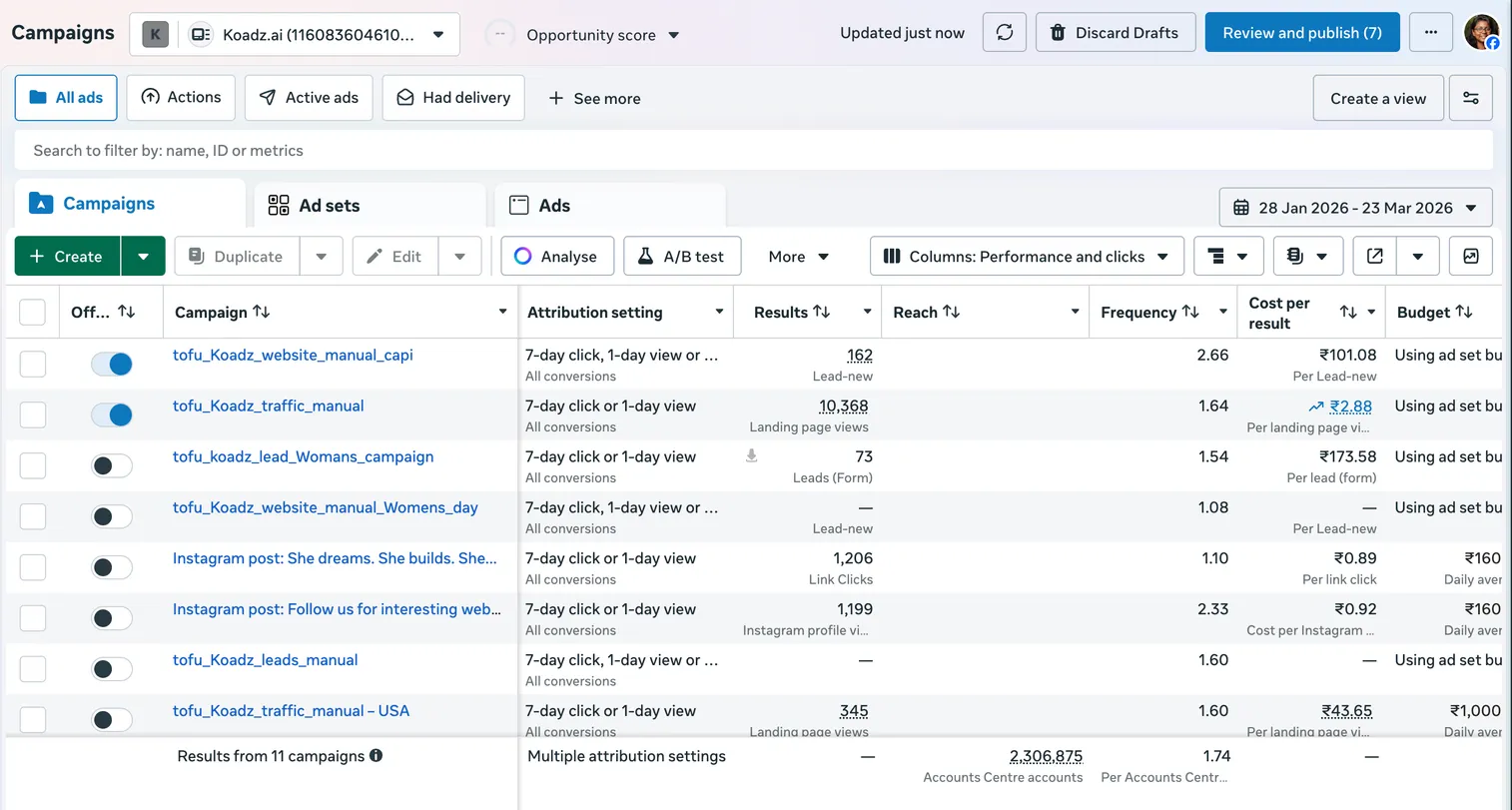
We drove a large volume of traffic at a very low cost per visit 10,000+ LPV at ₹1.64 per result), and alongside that, we were generating leads at roughly ₹100 per lead form filled.
What mattered here wasn’t just lead cost, but the fact that the audience was naturally broad. Anyone starting something new could be a potential user.
Because of that, scale was easier to unlock compared to the other two.
Finsight Analytics — Where Ads Feed a Sales Process
Finsight is an accounting SaaS. The audience is very specific — directors of finance, finance teams, people already using tools like Tally or SAP.
This is not a product someone signs up for casually after clicking an ad.
So the role of paid marketing here was very clear from the beginning — generate interest from the right people, and then hand it over to sales.
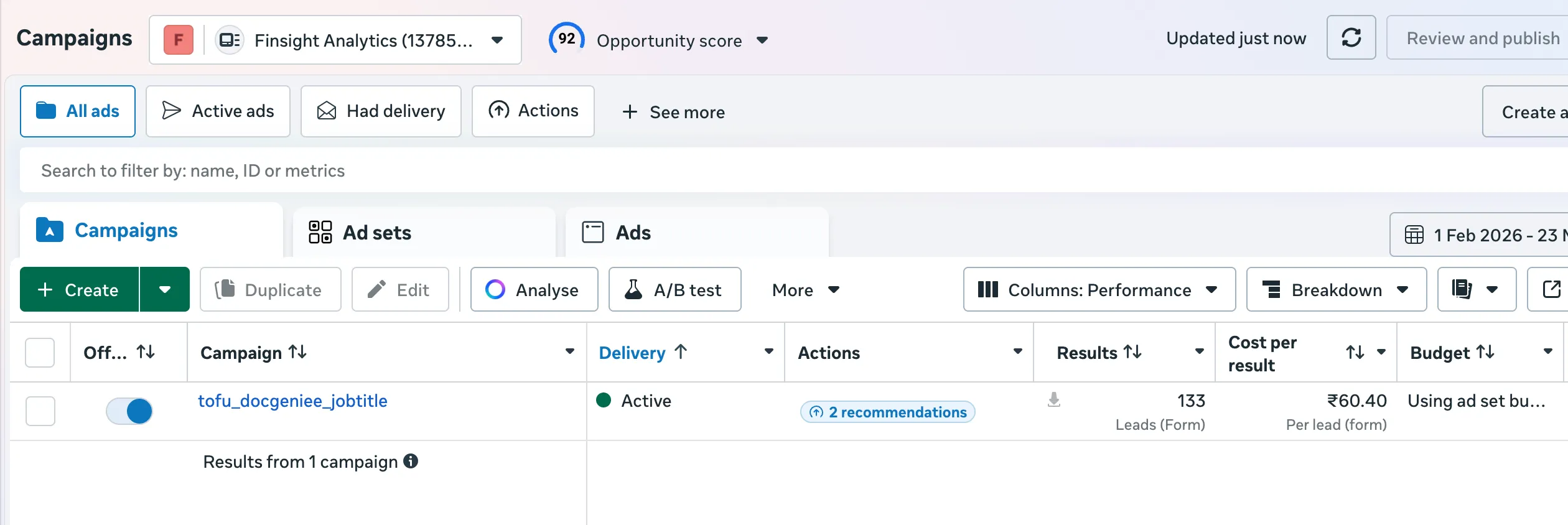
We brought in leads at around ₹60.
But more importantly, every single lead was followed up with a call. The goal wasn’t just to collect form submissions — it was to qualify them properly and then get them onto a demo with the client’s team.
That’s where decisions actually happened.
If you look at this purely from a “cost per lead” lens, you miss the point. The real metric was whether we were consistently getting the right kind of finance professionals into conversations.
MagicalCX — Fewer Leads, Higher Intent
MagicalCX operates in a different space. It’s a customer experience product, and not something every company urgently needs.
It’s for businesses that are already thinking about improving their customer journey and are willing to invest in it.
Naturally, that makes it a higher-ticket sale.
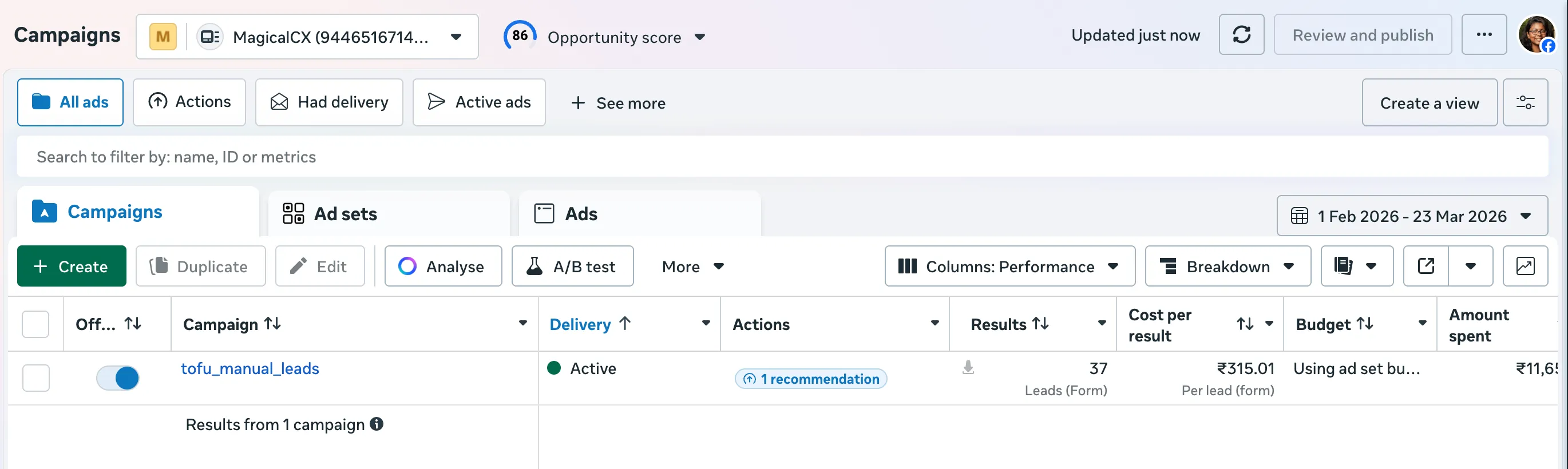
We generated fewer leads here, and the cost per lead was around ₹300.
And honestly, that number made complete sense.
Because unlike a broad or necessity-driven product, this is something only a smaller segment actively looks for. But when they do, they’re much more serious.
So the focus here wasn’t volume. It was relevance.
If a lead came in, there was a high chance they were worth speaking to. And since this also followed a sales-led approach, the downstream conversion mattered far more than the upfront cost.
What Running All Three Taught Me
The biggest shift for me was understanding that paid marketing doesn’t have a single role.
It changes depending on how the product is bought.
For something like Koadz, ads can drive both awareness and conversion at scale.
For Finsight, ads are there to consistently bring in the right finance audience so the sales team has conversations to work with.
For MagicalCX, ads are filtering for intent. You don’t need a lot of leads — you need the right ones.
Where Most People Go Wrong
A lot of teams try to apply the same expectations across everything.
They want:
- low CPL
- high volume
- and immediate conversions
That combination doesn’t exist for every product.
Especially not for high-ticket, sales-led SaaS.
In those cases, if the leads are relevant and the sales process is strong, a higher cost per lead is completely justified.
The Only Thing That Actually Matters
At the end of the day, paid ads are just the starting point.
What happens after someone fills a form is what decides whether any of this works.
- Are you speaking to the right people?
- Are they actually qualified?
- Can your sales team convert them?
If that part is working, paid marketing becomes predictable.
If it’s not, no amount of optimisation inside the ad account will fix it.